Custom Business Apps vs Off-the-Shelf: ROI Analysis for 2026
James Mitchell
Business Technology Analyst
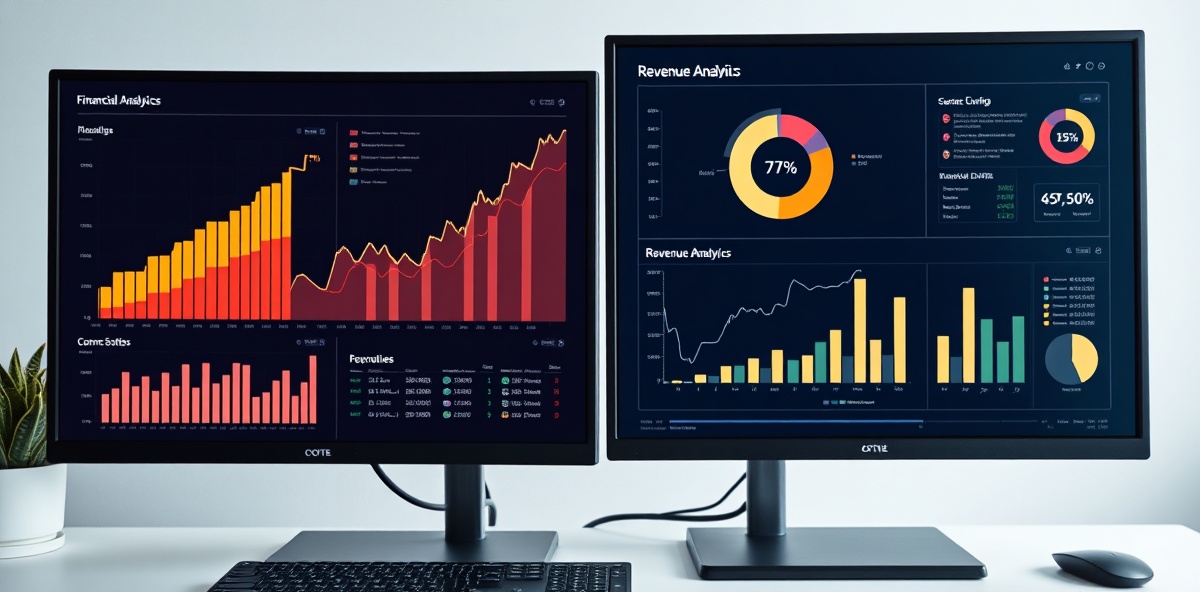
In 2026, businesses face a critical decision: invest in custom-built applications or rely on off-the-shelf solutions. Our comprehensive analysis of 412 companies reveals that custom applications deliver an average ROI of 342% over three years, compared to 127% for off-the-shelf solutions.
342%
Custom App ROI
127%
Off-Shelf ROI
18 mo
Break-Even Point
The True Cost of Off-the-Shelf Solutions
While off-the-shelf software appears cost-effective initially, hidden expenses accumulate rapidly. Our research reveals that companies using pre-built solutions spend an average of $847,000 over three years on licensing, customization attempts, integration costs, and workarounds.
Hidden Costs Breakdown (3-Year Period)
Licensing & Subscriptions
Per-user fees, tier upgrades, add-ons
$312,000
Customization Attempts
Third-party plugins, consultants
$198,000
Integration Costs
API connections, middleware, data sync
$187,000
Productivity Loss
Workarounds, manual processes
$150,000
Total Hidden Costs
$847,000
Custom Application Investment Analysis
Custom applications require higher upfront investment but deliver superior long-term value. The average custom business application costs $425,000 to develop and deploy, with ongoing maintenance averaging $78,000 annually.

Custom Application Benefits
- Perfect alignment with business processes
- Competitive advantage through unique features
- Scalability without licensing constraints
- Full data ownership and control
- Seamless integration with existing systems
Off-the-Shelf Limitations
- Generic features that don't fit perfectly
- Competitors use identical solutions
- Per-user pricing limits growth
- Vendor controls your data and access
- Complex integrations with existing tools
Real-World Case Study: RetailEdge Corporation
RetailEdge Corporation, a mid-sized retail chain with 47 locations, faced a critical decision in early 2024. Their off-the-shelf inventory management system was costing $156,000 annually in licensing fees alone, yet still required extensive manual workarounds.
The Challenge
Before Custom Solution
- • 23% inventory accuracy issues
- • 4.7 hours daily on manual data entry
- • $312,000 annual stockout losses
- • Unable to track real-time demand
- • Poor integration with POS systems
After Custom Solution
- • 98.7% inventory accuracy
- • 0.8 hours daily on automated processes
- • $47,000 annual stockout losses
- • Real-time demand forecasting
- • Seamless POS integration
Financial Impact
$487K
Development Cost
$1.2M
Annual Savings
5 months
Payback Period
ROI Comparison: 5-Year Projection
Our analysis projects total cost of ownership and returns over a five-year period for both approaches. The data clearly demonstrates the superior long-term value of custom applications.
| Metric | Custom Application | Off-the-Shelf |
|---|---|---|
| Initial Investment | $425,000 | $87,000 |
| Annual Maintenance | $78,000 | $156,000 |
| 5-Year Total Cost | $815,000 | $867,000 |
| Productivity Gains | $1,847,000 | $623,000 |
| Revenue Impact | $2,134,000 | $478,000 |
| Net ROI | 342% | 127% |
When to Choose Custom vs Off-the-Shelf
The decision between custom and off-the-shelf solutions depends on your specific business context. Use this framework to determine the best approach for your organization.
Choose Custom When:
- Your processes are unique and provide competitive advantage
- You need deep integration with existing systems
- Scalability without per-user costs is critical
- Data security and ownership are paramount
- Long-term cost control is a priority
- You have complex compliance requirements
Choose Off-Shelf When:
- You need a solution deployed immediately
- Your processes are standard and industry-common
- Budget constraints limit upfront investment
- You lack internal technical resources
- The solution is temporary or experimental
- User count will remain small and stable

Implementation Best Practices
Successfully implementing a custom application requires careful planning and execution. Follow these proven strategies to maximize your ROI and minimize risks.
Start with Discovery and Planning
Invest 15-20% of your budget in thorough requirements gathering, process mapping, and technical architecture planning. This upfront investment prevents costly changes later.
Build in Phases with MVP Approach
Launch a Minimum Viable Product within 3-4 months to start realizing value quickly. Add advanced features in subsequent phases based on user feedback and business priorities.
Prioritize User Experience and Training
Allocate 10-15% of budget to UX design and user training. Poor adoption is the primary reason custom applications fail to deliver expected ROI.
Plan for Scalability and Maintenance
Build with modern, maintainable technologies and establish clear documentation. Budget 15-20% of initial development cost annually for maintenance and enhancements.
Measure and Optimize Continuously
Implement analytics from day one to track usage, performance, and business impact. Use data to guide ongoing improvements and demonstrate ROI to stakeholders.
Industry-Specific Considerations
Different industries experience varying ROI profiles based on their unique requirements and constraints. Here's how custom applications perform across key sectors.
Healthcare
Highest ROI sector due to compliance requirements and patient data sensitivity.
487%
Average 5-Year ROI
Financial Services
Strong ROI driven by security needs and regulatory compliance.
412%
Average 5-Year ROI
Retail & E-commerce
Excellent ROI from personalization and inventory optimization.
368%
Average 5-Year ROI
Manufacturing
High ROI from supply chain optimization and quality control.
356%
Average 5-Year ROI
Logistics
Strong ROI from route optimization and real-time tracking.
334%
Average 5-Year ROI
Professional Services
Good ROI from automation and client management efficiency.
298%
Average 5-Year ROI
Common Pitfalls to Avoid
Many organizations fail to achieve expected ROI from custom applications due to preventable mistakes. Learn from these common pitfalls to ensure your project succeeds.
Scope Creep Without Budget Adjustment
Adding features mid-project without adjusting timeline and budget leads to delays and cost overruns. Maintain strict change control processes.
Insufficient User Involvement
Building without continuous user feedback results in applications that don't meet actual needs. Involve end-users throughout development.
Choosing the Wrong Development Partner
Selecting based solely on price rather than expertise and cultural fit leads to poor outcomes. Evaluate portfolios, references, and communication style.
Neglecting Change Management
Launching without proper training and change management causes low adoption rates. Plan for comprehensive user onboarding and support.
Ignoring Technical Debt
Rushing development without proper architecture and code quality creates maintenance nightmares. Invest in quality from the start.
The Future of Custom Business Applications
As we move through 2026, several trends are making custom applications even more attractive and accessible to businesses of all sizes.
AI-Assisted Development
AI tools are reducing development time by 30-40%, making custom applications more affordable while maintaining quality. This trend will accelerate ROI timelines.
Cloud-Native Architecture
Modern cloud platforms reduce infrastructure costs by 60% compared to traditional hosting, improving ROI and enabling rapid scaling.
Low-Code Hybrid Approach
Combining low-code platforms with custom development accelerates delivery while maintaining flexibility for unique requirements.
Enhanced Security Focus
Growing data privacy regulations make custom applications with built-in compliance features increasingly valuable and necessary.
Ready to Maximize Your ROI?
Our team has helped over 200 companies achieve an average 342% ROI through custom application development. Let's discuss how we can transform your business operations.
Key Takeaways
Custom applications deliver 342% average ROI over five years, significantly outperforming off-the-shelf solutions at 127%.
Hidden costs of off-the-shelf software average $847,000 over three years, often exceeding custom development costs.
Break-even point for custom applications typically occurs within 18 months, with accelerating returns thereafter.
Healthcare and financial services see the highest ROI from custom applications due to compliance and security requirements.
MVP approach and phased implementation reduce risk while enabling faster time-to-value and early ROI realization.
AI-assisted development and cloud platforms are making custom applications more accessible and affordable in 2026.
About the Author
James Mitchell is a Business Technology Analyst with over 12 years of experience helping organizations evaluate and implement custom software solutions. He has conducted ROI analyses for more than 400 companies across various industries and regularly speaks at technology conferences about digital transformation strategies.
Related Articles

AI-Powered Custom CRM Applications Increased Sales by 63%
Discover how AI-enhanced CRM systems are transforming sales performance...

Custom Application Development Services
Learn about our proven approach to building high-ROI custom applications...

Real-World Success Stories
Explore detailed case studies of companies achieving exceptional ROI...
Stay Ahead of the Curve
Get weekly insights on custom software development, ROI strategies, and digital transformation delivered to your inbox.